Python Data Types and Data Structures for DevOps 🐍🔧

Introduction 🚀
Python, a versatile and powerful programming language, has gained immense popularity in the DevOps domain due to its simplicity, ease of use, and a diverse range of built-in data types and data structures. 📚 DevOps professionals leverage Python for automation, configuration management, monitoring, and more. In this comprehensive guide, we will delve into the essential data types and data structures in Python, exploring how they contribute to enhancing DevOps workflows. 🏗️
Python Data Types 📚
1.1. Numeric Data Types 🔢
Integers (int): Integers are whole numbers without a decimal point, such as 5, -10, or 100. In DevOps, integers are commonly used to represent quantities, such as the number of servers or resources.
Floating-point numbers (float): Floating-point numbers include decimal points, like 3.14, -2.75, or 1.0. These data types are essential when dealing with measurements or calculations that require precision.
1.2. Text Data Type 📝
Strings (str): Strings are sequences of characters, enclosed within single ('') or double ("") quotes. They are fundamental in DevOps for managing text-based configurations, handling log messages, or interacting with APIs that return text responses.
Example: "Hello, World!", 'DevOps Rocks!' 😎
1.3. Boolean Data Type ✅
- Boolean (bool): Booleans represent the truth value of either True or False. In DevOps, booleans are crucial for decision-making and conditional statements. They help control the flow of scripts and determine whether specific actions should be taken based on conditions.
1.4. Sequence Data Types 🔗
Lists: Lists are ordered, mutable collections of elements, enclosed in square brackets ([]). They are incredibly versatile and widely used in DevOps for various purposes, such as storing server information, managing configurations, or keeping track of tasks in a queue.
Tuples: Tuples are similar to lists but are immutable, meaning their elements cannot be changed after creation. DevOps professionals use tuples for data that should remain constant throughout the process, such as fixed configurations or server addresses.
1.5. Mapping Data Type 🗺️
Dictionaries (dict): Dictionaries are unordered collections of key-value pairs, enclosed in curly braces ({}). In DevOps, dictionaries are essential for managing complex configurations, enviro
nment variables, or storing data in a structured manner.
Example: {"name": "John", "age": 30}
Python Data Structures in DevOps 🏗️
2.1. Lists 📋
Lists play a crucial role in DevOps automation. They allow DevOps engineers to store and manage data in an ordered manner, making it easy to loop through elements and perform repetitive tasks efficiently.
Example: cloud_providers = ["AWS", "Azure", "GCP"]
2.2. Tuples 📦
Tuples provide immutability, making them suitable for storing data that should not change during the DevOps process. They are often used to hold fixed configurations or coordinates.
Example: service_health = {"service1": "operational", "service2": "degraded"}
2.3. Dictionaries 📚🔑
Dictionaries are a powerhouse for DevOps tasks. They allow DevOps practitioners to store and retrieve data using meaningful keys, making it easy to access information based on specific criteria.
Example: service_health = {"service1": "operational", "service2": "degraded"}
Advantages of Using Python Data Types and Data Structures in DevOps 📈
3.1. Readability and Ease of Use 👓
- Python's clear and expressive syntax enhances code readability, making it easier for DevOps professionals to collaborate, maintain, and understand each other's code.
3.2. Extensive Standard Library 📚🔌
- Python's vast standard library provides a rich collection of modules for file handling, network operations, and system interactions, streamlining various DevOps tasks without the need for additional external libraries.
3.3. Rapid Prototyping and Automation ⏭️🤖
- Python's dynamic nature allows DevOps engineers to prototype scripts quickly and automate repetitive tasks, resulting in increased efficiency and faster development cycles.
Difference between List, Tuple, and Set
List:
Lists are ordered collections of elements, and they are mutable, meaning their elements can be modified after creation. 📋
Elements in a list are enclosed in square brackets ([]).
Lists allow duplicate elements, and they maintain the order of insertion.
Lists are commonly used when the data needs to be changed or updated frequently. 💪
Tuple:
Tuples are ordered collections of elements, but they are immutable, meaning their elements cannot be changed after creation. 📦
Elements in a tuple are enclosed in parentheses (()).
Tuples allow duplicate elements and maintain the order of insertion.
Tuples are typically used when the data needs to remain constant throughout the program execution. 🚀
Set:
Sets are unordered collections of unique elements. 🔗
Elements in a set are enclosed in curly braces ({}) or can be created using the
set()constructor.Sets automatically remove duplicate elements, and they do not maintain the order of insertion.
Sets are useful when you need to perform mathematical operations like union, intersection, and difference on collections. ✨
Tasks
1. Create the Dictionary and Access Favorite Tool:
fav_tools = {
  1: "Linux",
  2: "Git",
  3: "Docker",
  4: "Kubernetes",
  5: "Terraform",
  6: "Ansible",
  7: "Chef"
}

# Accessing the favorite tool using the key (2 for "Git") 😎
fav_tool_key = 2
favorite_tool = fav_tools[fav_tool_key]
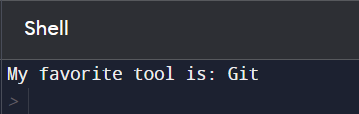
print("My favorite tool is:", favorite_tool)
Output:
2. Create the List of Cloud Service Providers:
cloud_providers = ["AWS", "GCP", "Azure"]
In the first task, we created the fav_tools dictionary and accessed the value corresponding to key 2, which is "Git", and printed it as our favorite tool. In the second task, we created the cloud_providers list containing cloud service provider names: "AWS", "GCP", and "Azure". 🌟
3. Write a program to add Digital Ocean to the list of cloud_providers and sort the list in alphabetical order.
# Original list of cloud_providers
cloud_providers = ["AWS", "GCP", "Azure"]

# Add "Digital Ocean" to the list
cloud_providers.append("Digital Ocean")

# Sort the list in alphabetical order
cloud_providers.sort()

# Print the updated list
print("Updated list of cloud providers:")
for provider in cloud_providers:
    print(provider)
Output:
Updated list of cloud providers:
AWS
Azure
Digital Ocean
GCP
In this program, we start with the original list of cloud_providers containing "AWS", "GCP", and "Azure". We then use the append() method to add "Digital Ocean" to the list. Finally, we use the sort() method to sort the list in alphabetical order. The sorted list is then printed to the console.
Conclusion 🎯
Python's wide range of data types and data structures empower DevOps practitioners with the tools they need to handle diverse tasks, from configuration management to automation and monitoring. The simplicity, readability, and extensive standard library make Python an excellent choice for DevOps workflows, ensuring smoother and more efficient operations in the ever-evolving DevOps ecosystem. 🚀💻🔧


